-
Oct 1, 2026
-
Sep 30, 2026Update: Accepted at the Neural Network Artifacts as a New Data Modality Workshop at NeurIPS 2026!
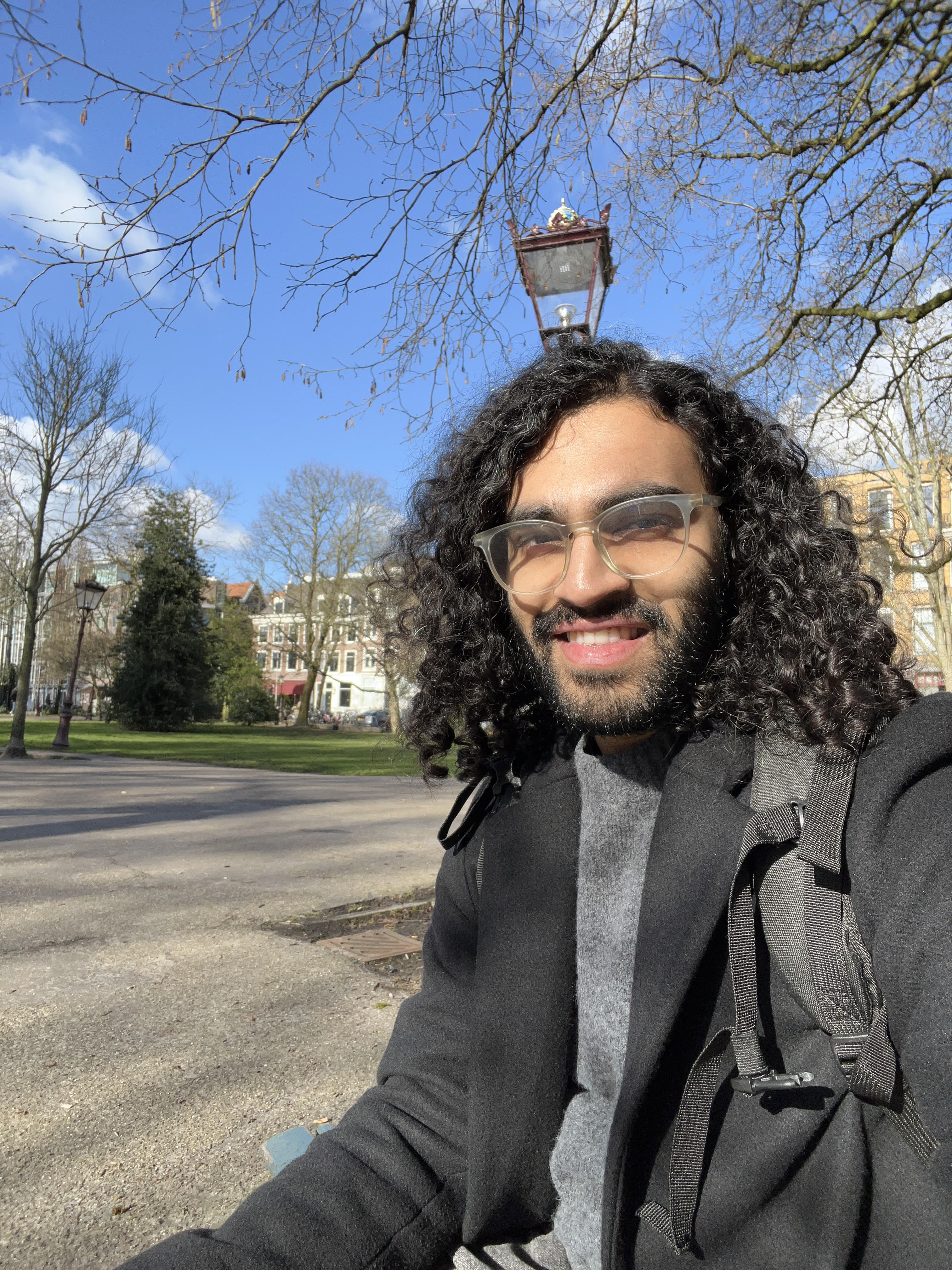
Hey, I am Darpan! I am a second year Master's in Artificial Intelligence student
at Université Paris-Saclay, supported by the MixtAI Scholarship. My research interests lie at
the intersection of
safety, interpretability and reasoning.
I am currently a research intern at the Laboratoire d'Informatique de Grenoble,
Université Grenoble-Alpes, working with
Professor Maxime Peyrard on interpreting continuous latent reasoning in Large Reasoning Models.
Before that, I worked with
Professor Céline Hudelot as a research engineer at the MICS Laboratory, CentraleSupélec, working on
mechanistic interpretability to develop safety methods for Large Multimodal Models.
I obtained my bachelor's degree in Electronics and Electrical Communication Engineering from the Indian Institute of Technology, Kharagpur, where I worked in the CNeRG Laboratory, IIT Kharagpur on Red Teaming Large Language Models. For my bachelor's thesis, I worked on Environmental Claim Detection using Hyperbolic Graph Neural Nets. I also had a short stint in the industry where I worked as a software engineer intern at JPMorgan Chase & Co. Find more about me in my resume.
We introduce Diffusion Layer Integrated Gradients (DLIG), which extends Integrated Gradients to arbitrary layers and denoising steps of diffusion language models, attributing a model's progressive commitment to a completion while preserving the IG axioms. Applying DLIG to word-sense disambiguation, multi-hop reasoning and sentence infilling, we show how DLMs use their inputs across positions, layers and denoising time.
We show that observable latent-state patterns in models like Coconut and CODI, such as BFS-like frontiers and decodable arithmetic, also emerge in matched controls lacking the proposed reasoning mechanisms. Using causal interventions, we find latent thoughts act on a spectrum rather than a binary, with step-to-step geometry growing more structured as behavioral influence increases, arguing that interpretability claims require causal tests, not just observable patterns.
We introduce ConceptGuard, a neuro-symbolic safety guardrail framework for LLMs that leverages Sparse Autoencoder extracted interpretable jailbreak features. We model jailbreak concepts with structured feature analysis, training linear classifiers to enable the design of highly interpretable yet generalisable safety guardrails.
We show that large language models can be tricked into producing unsafe outputs when English and Hindi are mixed in the same sentence and words are misspelled to sound the same. This exposes a tokenization vulnerability that lets harmful prompts slip through guardrails, raising serious concerns about the safety of LLMs in multilingual contexts.
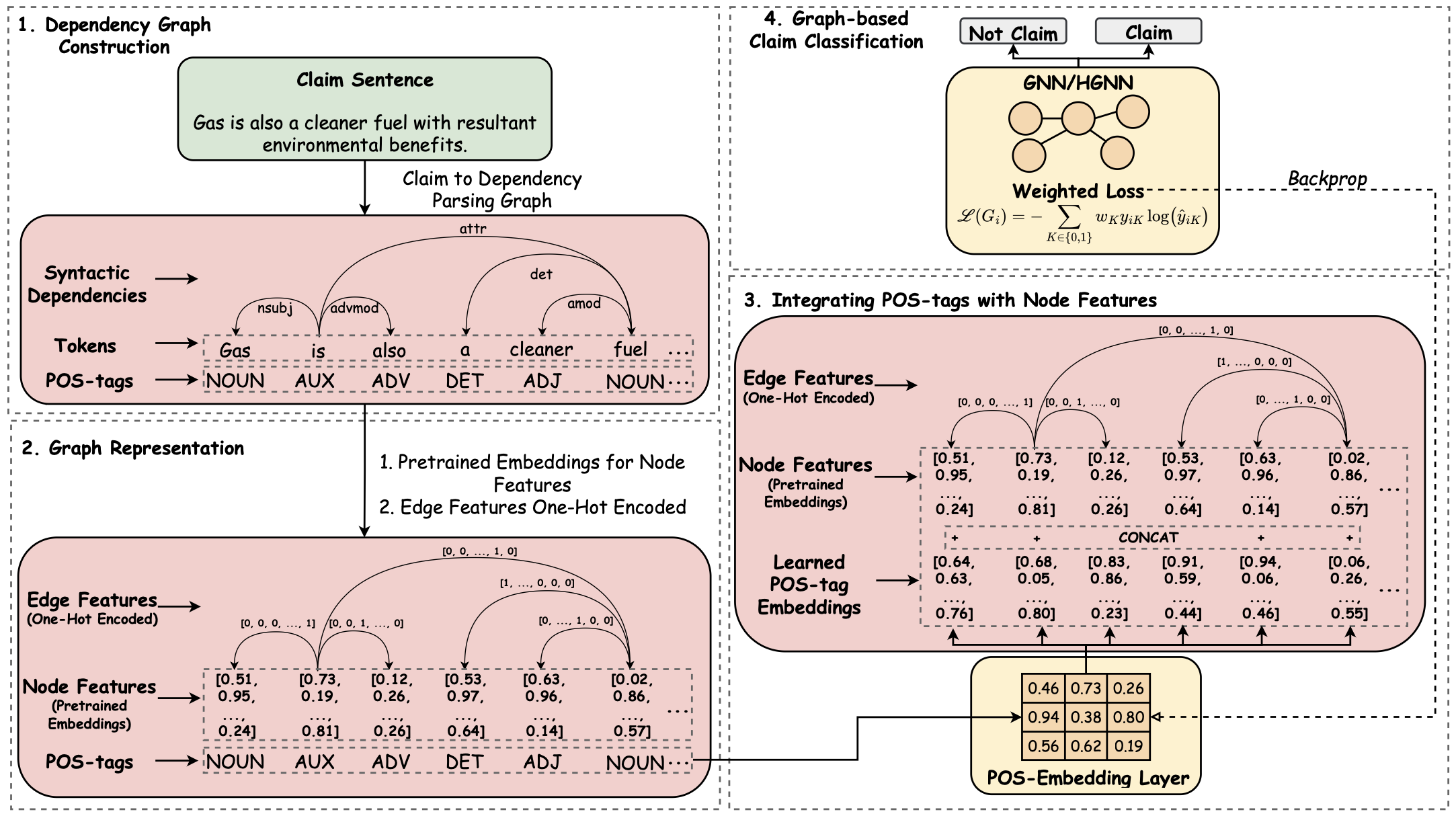
We study GNNs for detecting environmental claims, offering an efficient and interpretable alternative to LLMs. We show that GNNs and Hyperbolic GNNs can surpass SOTA performance while using 30× fewer parameters, enabling lightweight and transparent claim verification.
I am a passionate musician and I love playing the guitar and singing! I also really enjoy travelling and solo adventures :).